BEYOND THE NAME – PUBLIC EDUCATION SERIES – EPISODE 4
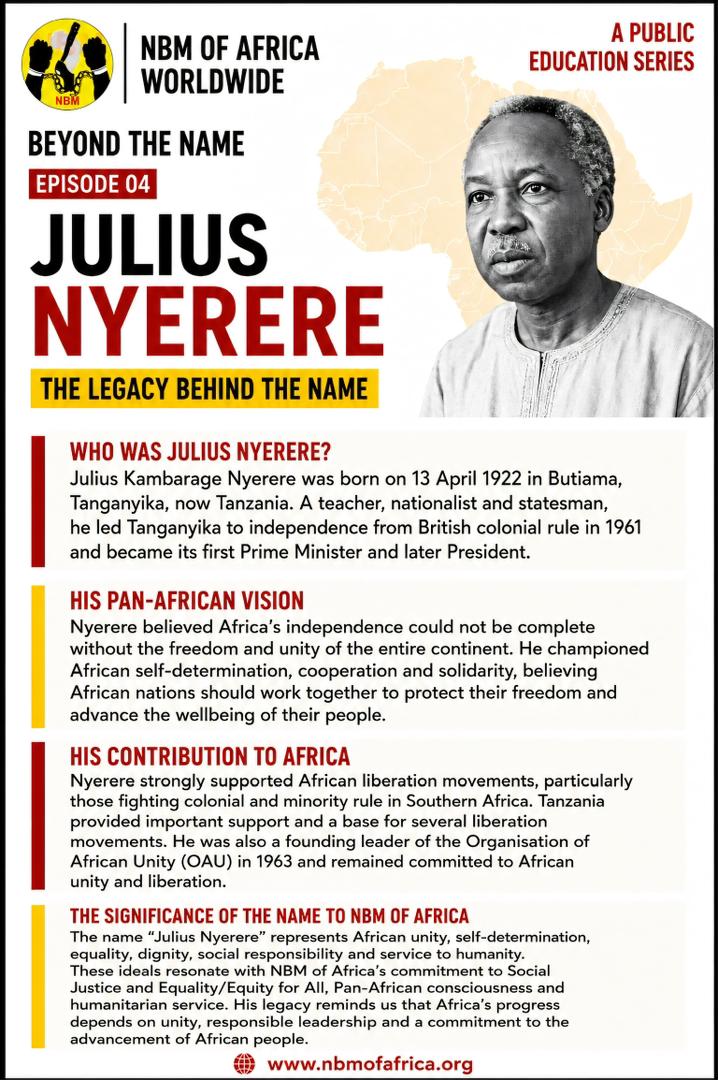
JULIUS NYERERE – THE LEGACY BEHIND THE NAME
WHO WAS JULIUS NYERERE?
Julius Kambarage Nyerere was born on 13 April 1922 in Butiama, Tanganyika, now Tanzania. A teacher, nationalist and statesman, he led Tanganyika to independence from British colonial rule in 1961 and became its first Prime Minister and later President.
Julius Kambarage Nyerere was born on 13 April 1922 in Butiama, Tanganyika, now Tanzania. A teacher, nationalist and statesman, he led Tanganyika to independence from British colonial rule in 1961 and became its first Prime Minister and later President.
HIS PAN-AFRICAN VISION
Nyerere believed Africa’s independence could not be complete without the freedom and unity of the entire continent. He championed African self-determination, cooperation and solidarity, believing African nations should work together to protect their freedom and advance the wellbeing of their people.
Nyerere believed Africa’s independence could not be complete without the freedom and unity of the entire continent. He championed African self-determination, cooperation and solidarity, believing African nations should work together to protect their freedom and advance the wellbeing of their people.
HIS CONTRIBUTION TO AFRICA
Nyerere strongly supported African liberation movements, particularly those fighting colonial and minority rule in Southern Africa. Tanzania provided important support and a base for several liberation movements. He was also a founding leader of the Organisation of African Unity (OAU) in 1963 and remained committed to African unity and liberation.
Nyerere strongly supported African liberation movements, particularly those fighting colonial and minority rule in Southern Africa. Tanzania provided important support and a base for several liberation movements. He was also a founding leader of the Organisation of African Unity (OAU) in 1963 and remained committed to African unity and liberation.
THE SIGNIFICANCE OF THE NAME TO NBM OF AFRICA
The name “Julius Nyerere” represents African unity, self-determination, equality, dignity, social responsibility and service to humanity. These ideals resonate with NBM of Africa’s commitment to Social Justice and Equality/Equity for All, Pan-African consciousness and humanitarian service. His legacy reminds us that Africa’s progress depends on unity, responsible leadership and a commitment to the advancement of African people.
The name “Julius Nyerere” represents African unity, self-determination, equality, dignity, social responsibility and service to humanity. These ideals resonate with NBM of Africa’s commitment to Social Justice and Equality/Equity for All, Pan-African consciousness and humanitarian service. His legacy reminds us that Africa’s progress depends on unity, responsible leadership and a commitment to the advancement of African people.