BEYOND THE NAME – PUBLIC EDUCATION SERIES – EPISODE 1
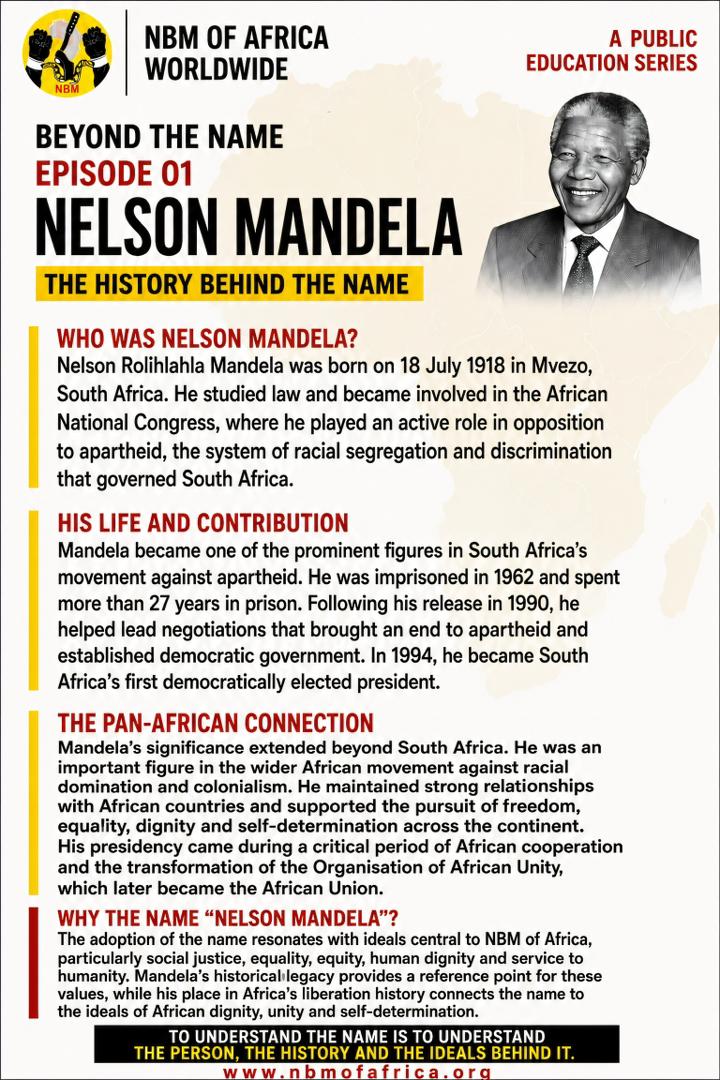
NELSON MANDELA – THE HISTORY BEHIND THE NAME
- WHO WAS NELSON MANDELA?
Nelson Rolihlahla Mandela was born on 18 July 1918 in Mvezo, South Africa. He studied law and became involved in the African National Congress, where he played an active role in opposition to apartheid, the system of racial segregation and discrimination that governed South Africa. - HIS LIFE AND CONTRIBUTION
Mandela became one of the prominent figures in South Africa’s movement against apartheid. He was imprisoned in 1962 and spent more than 27 years in prison. Following his release in 1990, he helped lead negotiations that brought an end to apartheid and established democratic government. In 1994, he became South Africa’s first democratically elected president. - THE PAN-AFRICAN CONNECTION
Mandela’s significance extended beyond South Africa. He was an important figure in the wider African movement against racial domination and colonialism. He maintained strong relationships with African countries and supported the pursuit of freedom, equality, dignity and self-determination across the continent. His presidency came during a critical period of African cooperation and the transformation of the Organisation of African Unity, which later became the African Union. - WHY THE NAME “NELSON MANDELA”?
The adoption of the name resonates with ideals central to NBM of Africa, particularly social justice, equality, equity, human dignity and service to humanity. Mandela’s historical legacy provides a reference point for these values, while his place in Africa’s liberation history connects the name to the ideals of African dignity, unity and self-determination.
TO UNDERSTAND THE NAME IS TO UNDERSTAND THE PERSON, THE HISTORY AND THE IDEALS BEHIND IT.