BEYOND THE NAME – PUBLIC EDUCATION SERIES – EPISODE 25
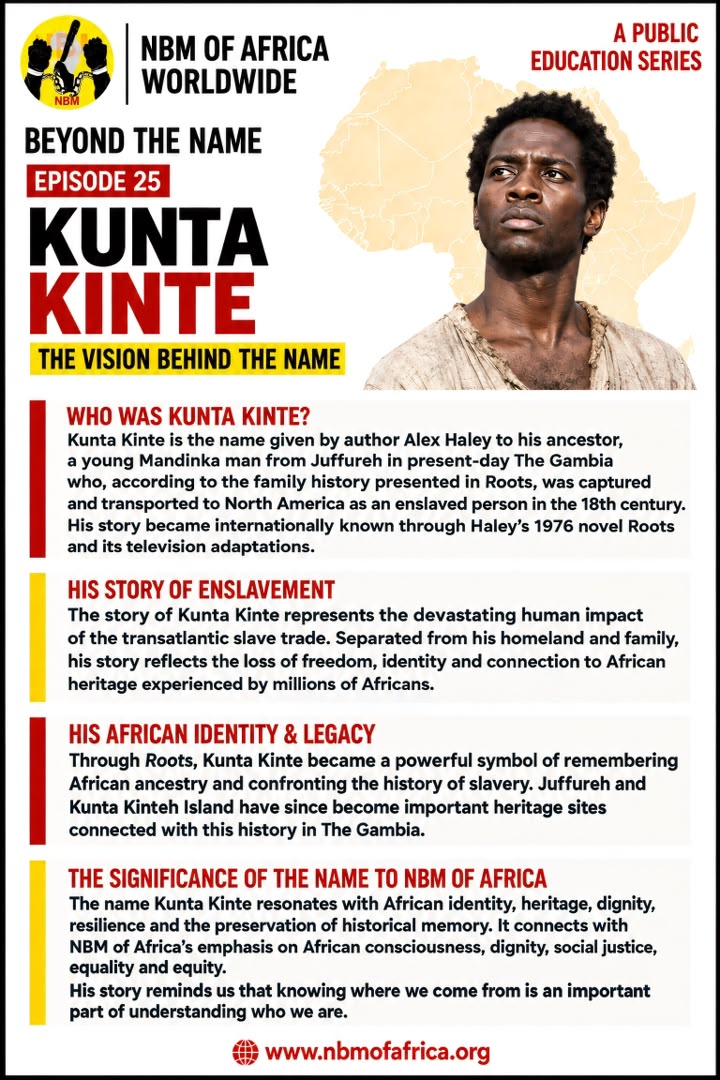
KUNTA KINTE – THE VISION BEHIND THE NAME
- WHO WAS KUNTA KINTE?
Kunta Kinte is the name given by author Alex Haley to his ancestor, a young Mandinka man from Juffureh in present-day The Gambia who, according to the family history presented in Roots, was captured and transported to North America as an enslaved person in the 18th century. His story became internationally known through Haley’s 1976 novel Roots and its television adaptations. - HIS STORY OF ENSLAVEMENT
The story of Kunta Kinte represents the devastating human impact of the transatlantic slave trade. Separated from his homeland and family, his story reflects the loss of freedom, identity and connection to African heritage experienced by millions of Africans. - HIS AFRICAN IDENTITY & LEGACY
Through Roots, Kunta Kinte became a powerful symbol of remembering African ancestry and confronting the history of slavery. Juffureh and Kunta Kinteh Island have since become important heritage sites connected with this history in The Gambia. - THE SIGNIFICANCE OF THE NAME TO NBM OF AFRICA
The name Kunta Kinte resonates with African identity, heritage, dignity, resilience, and the preservation of historical memory. It connects with NBM of Africa’s emphasis on African consciousness, dignity, social justice, equality and equity.
His story reminds us that knowing where we come from is an important part of understanding who we are.