BEYOND THE NAME – PUBLIC EDUCATION SERIES – EPISODE 62
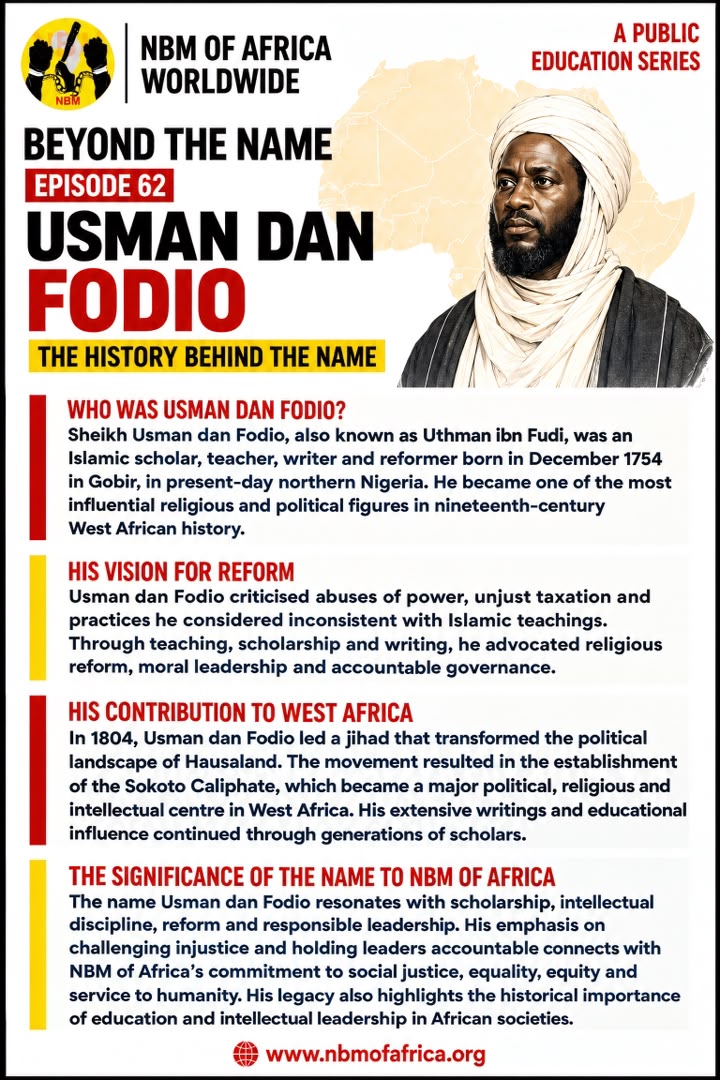
USMAN DAN FODIO – THE HISTORY BEHIND THE NAME
WHO WAS USMAN DAN FODIO?
Sheikh Usman dan Fodio, also known as Uthman ibn Fudi, was an Islamic scholar, teacher, writer and reformer born in December 1754 in Gobir, in present-day northern Nigeria. He became one of the most influential religious and political figures in nineteenth-century West African history.
HIS VISION FOR REFORM
Usman dan Fodio criticised abuses of power, unjust taxation and practices he considered inconsistent with Islamic teachings. Through teaching, scholarship and writing, he advocated religious reform, moral leadership and accountable governance.
HIS CONTRIBUTION TO WEST AFRICA
In 1804, Usman dan Fodio led a jihad that transformed the political landscape of Hausaland. The movement resulted in the establishment of the Sokoto Caliphate, which became a major political, religious and intellectual centre in West Africa. His extensive writings and educational influence continued through generations of scholars.
THE SIGNIFICANCE OF THE NAME TO NBM OF AFRICA
The name Usman dan Fodio resonates with scholarship, intellectual discipline, reform and responsible leadership. His emphasis on challenging injustice and holding leaders accountable connects with NBM of Africa’s commitment to social justice, equality, equity and service to humanity. His legacy also highlights the historical importance of education and intellectual leadership in African societies.