BEYOND THE NAME – PUBLIC EDUCATION SERIES – EPISODE 83
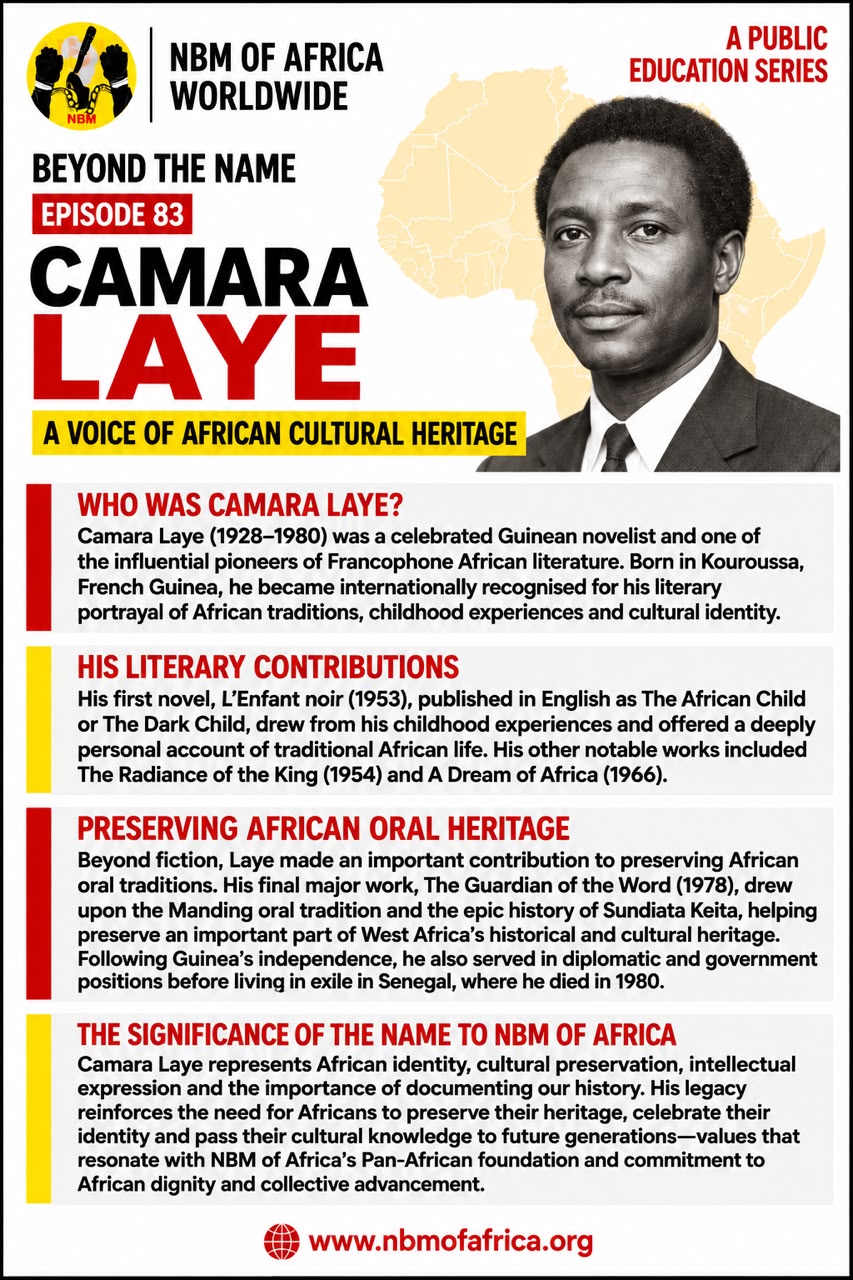
CAMARA LAYE – A VOICE OF AFRICAN CULTURAL HERITAGE
WHO WAS CAMARA LAYE?
Camara Laye (1928–1980) was a celebrated Guinean novelist and one of the influential pioneers of Francophone African literature. Born in Kouroussa, French Guinea, he became internationally recognised for his literary portrayal of African traditions, childhood experiences and cultural identity.
HIS LITERARY CONTRIBUTIONS
His first novel, L’Enfant noir (1953), published in English as The African Child or The Dark Child, drew from his childhood experiences and offered a deeply personal account of traditional African life. His other notable works included The Radiance of the King (1954) and A Dream of Africa (1966).
PRESERVING AFRICAN ORAL HERITAGE
Beyond fiction, Laye made an important contribution to preserving African oral traditions. His final major work, The Guardian of the Word (1978), drew upon the Manding oral tradition and the epic history of Sundiata Keita, helping preserve an important part of West Africa’s historical and cultural heritage. Following Guinea’s independence, he also served in diplomatic and government positions before living in exile in Senegal, where he died in 1980.
THE SIGNIFICANCE OF THE NAME TO NBM OF AFRICA
Camara Laye represents African identity, cultural preservation, intellectual expression and the importance of documenting our history. His legacy reinforces the need for Africans to preserve their heritage, celebrate their identity and pass their cultural knowledge to future generations—values that resonate with NBM of Africa’s Pan-African foundation and commitment to African dignity and collective advancement.